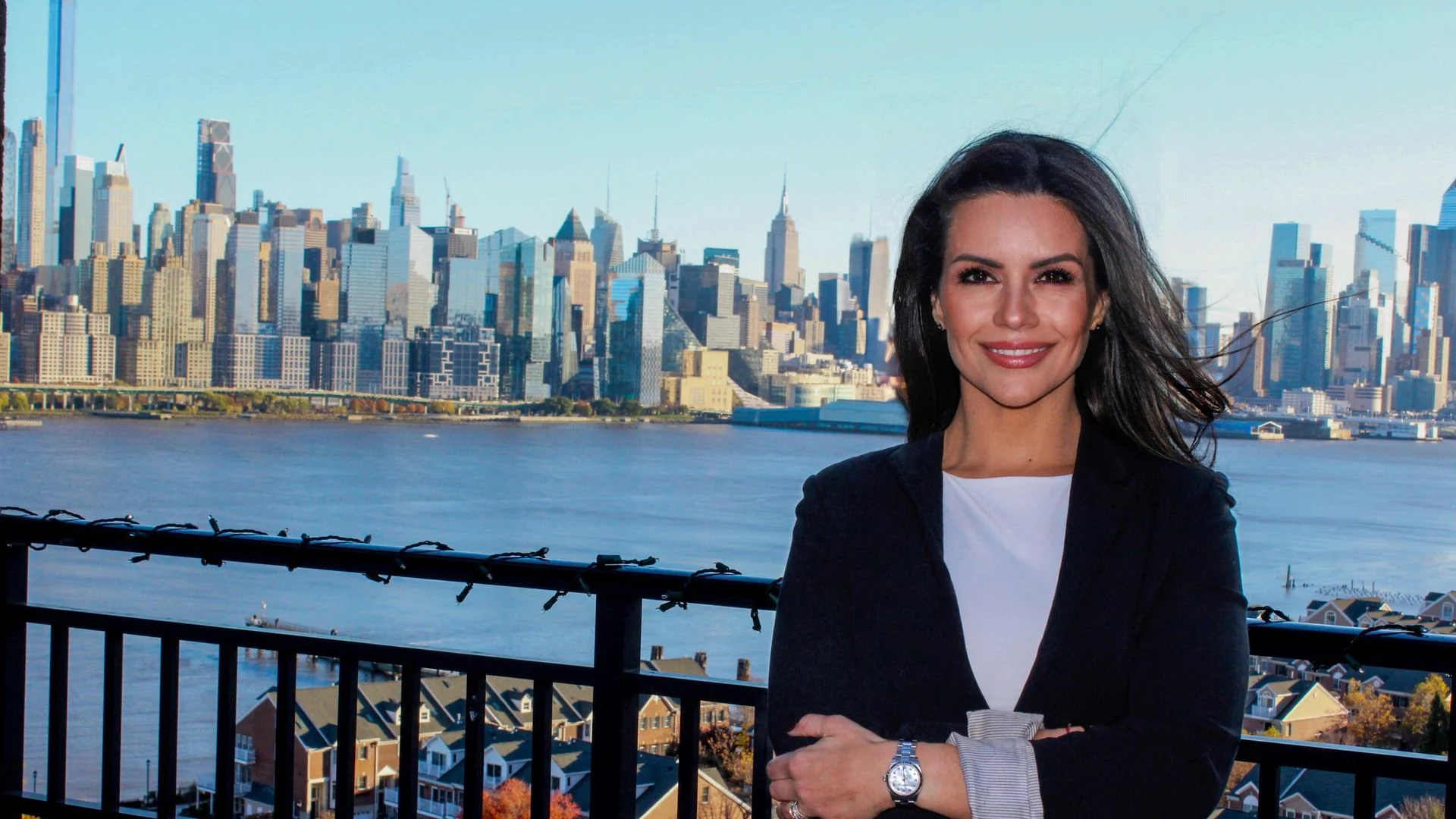
Long before she was helping plan the biggest sporting event on the planet, Bettina Garibaldi was an Argentine kid glued to the television during the World Cup.
Like millions of Argentines, she grew up in a home where football wasn’t simply entertainment. “It was identity,” she tells ¡HOLA!. “It was emotion, superstition, joy, heartbreak, family, noise, passion… all of it.”
Today, Garibaldi serves as Vice President of Marketing and Communications for the FIFA New York New-Jersey Host Committee, helping shape how millions of fans will experience the 2026 FIFA World Cup in the region that will host the tournament’s most anticipated moment, the Final at MetLife Stadium on July 19.
For most fans, the World Cup is about what happens on the field. The goals. The drama. The last-minute victories. The stars who become legends overnight. But before the world’s biggest sporting event can captivate billions of people, someone has to imagine what that experience will feel like beyond the game itself. That’s where Bettina comes in.
For her, the role feels deeply personal. Her family moved to the United States just one year before the country last hosted the World Cup in 1994. More than three decades later, she finds herself helping bring the tournament back, this time from behind the scenes.
“New York-New, Jersey already represents the world. That’s what makes this region uniquely powerful as a host. You can hear ten languages, eat food from every continent, and find fans from almost every nation competing in the tournament. The World Cup isn’t arriving somewhere foreign. In many ways, it’s arriving home.”
Bettina Garibaldi
“My job is to help shape how the world experiences this moment beyond the 90 minutes on the pitch,” she says.
Ahead of the 2026 FIFAWorld Cup, ¡HOLA! connected with Garibaldi about her Argentine roots, the emotion behind Argentina’s historic 2022 World Cup victory, and what it means to help welcome the world to the region that will host the tournament’s defining moment.
Most people experience the World Cup through the matches, the players, and the spectacle. But there’s an entire world behind the scenes that makes it all possible. When someone asks what you do, how do you explain your role?
I usually tell people my job is to help shape how the world experiences this moment beyond the 90 minutes on the pitch. Yes, there’s marketing and communications, but it’s also storytelling, culture-building, community engagement, partnerships, crisis management, fan experience, and helping make sure millions of people feel emotionally connected to something much bigger than a sporting event.
The World Cup touches transportation, security, tourism, small businesses, music, fashion, food, public safety, diplomacy, culture… almost every aspect of civic life. A huge part of my role is connecting all those worlds into one cohesive experience and narrative for fans, communities, partners, media, and the region itself.
We also have to ask, as someone who grew up with Argentine soccer in her DNA, was there a moment when the magnitude of working on this project really hit you?
Honestly, I think it hits me in waves. I grew up in a household where Argentine football wasn’t entertainment, it was identity. It was emotion, superstition, joy, heartbreak, family, noise, passion… all of it.
My family and I moved to the United States just a year before the last time the World Cup was hosted here in 1994. So there’s something incredibly full-circle about now helping shape how the biggest sporting event on earth comes to life in New York New Jersey.
As an Argentine woman who grew up completely obsessed with the sport, there are definitely moments where the magnitude of it all still feels difficult to comprehend.
“Argentina winning in 2022 changed me. I don’t think non-football cultures always understand that the World Cup becomes a marker in your life. You remember where you were, who you were with, what you felt.”
Is there a World Cup memory that still lives with you, and that influences how you think about creating unforgettable experiences for fans in 2026?
Argentina winning in 2022 changed me. I don’t think non-football cultures always understand that the World Cup becomes a marker in your life. You remember where you were, who you were with, what you felt.
Before 2022, Argentina’s last World Cup title was in 1986 with Diego Maradona in Mexico. I was very young and honestly don’t really remember it. So for my generation of Argentines, there had been decades of heartbreak and near-misses leading up to that moment. We had come painfully close so many times. Then came the Copa América win in 2021, which already felt emotional and symbolic in its own right, and suddenly the country started believing again. But winning the Qatar World Cup 2022… that was on another level entirely.
What also made that tournament especially emotional for me was that, professionally, I was working with the Supreme Committee for Delivery & Legacy, which was essentially Qatar’s equivalent of our Host Committee. I had visited all the stadiums, immersed myself in the culture, and developed a real appreciation for the scale and ambition behind what they were building.
So I was deeply invested in it from both a personal and professional perspective. I understood firsthand the years of work, pressure, planning, and emotion happening behind the scenes, while simultaneously experiencing it through the lens of an Argentine fan who had waited her whole life to see that moment happen.
What stayed with me most wasn’t even just the trophy lift. It was watching complete strangers cry together, hug each other, sing in the streets, climb on buses, stop traffic… there was this overwhelming collective emotion and release after decades of waiting.
That’s what we think about constantly when designing fan experiences for 2026. People may forget specific scores over time, but they’ll never forget how they felt in those moments. My job is to create environments (both physically and digitally) where those memories can happen at scale.
Lionel Messi of Argentina lifts the FIFA World Cup Trophy as he celebrates with team mates at their World Cup victory at Lusail Stadium on December 18, 2022 in Lusail City, Qatar.
What does it mean to you, personally, to be one of the Latina women helping shape one of the biggest sporting events in the world?
It means a lot. Especially because growing up, I didn’t see many women—let alone Latina women—in leadership roles around global sports, major events, or executive decision-making.
There’s also something really powerful about helping shape how the world experiences football in one of the most diverse regions on earth. New York and New Jersey are immigrant communities. They’re diaspora communities. Football already lives deeply in these neighborhoods and cultures. So in many ways, this work feels personal.
I also feel a responsibility to lead visibly and authentically. Not performatively.
You spent more than a decade helping global brands tell their stories. What lessons from that world have proven surprisingly valuable in preparing for a World Cup?
Probably the understanding that participation is more powerful than reach.
The old model of marketing was often: create a campaign, push a message, buy or earn media attention. But the best modern brands create worlds people want to step into emotionally and socially. They create moments people want to talk about, share, experience, and feel ownership over.
That mindset has heavily shaped how we approach the World Cup. We’re not just promoting matches at a stadium. We’re building a six-week regional cultural movement across neighborhoods, communities, fan events, creators, local businesses, music, food, and storytelling.
Agency life also trains you to operate with speed. You learn how to make smart decisions quickly, adapt in real time, manage complexity, and move large initiatives forward without over-processing every detail for weeks. That becomes incredibly valuable in an environment like the World Cup where there are constantly moving pieces, evolving priorities, and moments where you simply have to execute.
And yes, agency life also trains you to operate calmly in chaos. That part has proven very useful too.
New York New Jersey is officially hosting the Final, the most important night of the biggest game on the planet. When you first got that news, what was the very first thought that went through your head regarding how you’d tell that story to the world?
I actually joined after New York New Jersey had already been awarded the Final, so I didn’t have that singular “we got it” moment that some of my colleagues experienced in real time. But when I stepped into this role and fully understood the magnitude of what this region was about to host, the thought that kept coming back to me was: this cannot feel like eight matches at a stadium.
The Final belongs to the entire region. The story had to feel bigger than sports. From the beginning, I kept thinking about how every borough, every neighborhood, every community, and both states could feel ownership over this moment and genuinely feel part of it.
Because the truth is, New York New Jersey already represents the world. That’s what makes this region uniquely powerful as a host. You can walk a few blocks and hear ten languages, eat food from every continent, and find fans from almost every nation competing in the tournament.
The World Cup isn’t arriving somewhere foreign. In many ways, it’s arriving home. And getting to now live and breathe this every day, helping shape how the world experiences our region during this moment, is something I don’t take for granted for a second.
“The Final belongs to the entire region. The story had to feel bigger than sports. From the beginning, I kept thinking about how every borough, every neighborhood, every community, and both states could feel ownership over this moment and genuinely feel part of it.”
Bettina Garibaldi
Working in sports has historically been seen as a bit of an ‘old boys’ club.’ Have you felt a shift in the room lately, and what’s the most important thing you’re doing to make sure the door stays open for the next generation of women in sports marketing?”
I do think the room is changing, and meaningfully. There are more women leading major conversations, more women trusted with high-stakes decision-making, and more recognition that diverse leadership actually creates stronger ideas and stronger outcomes.
The most important thing is creating environments where younger women are actually given access, visibility, mentorship, trust, and room to lead.
I try to be very intentional about bringing younger talent into rooms early, giving people opportunities before they feel “fully ready,” and making sure credit is shared openly.
Confidence compounds through experience and not being afraid to try.
Opening day – finally the eyes of the world are watching, where do you think you’ll be emotionally in that moment? What do you imagine you’ll feel?
Very excited.
But honestly, I think it’ll feel emotional in a way I won’t fully anticipate until it happens.
We’ve spent years building toward this moment across thousands of meetings, strategies, partnerships, approvals, community conversations, and moving pieces most people will never see.
Then suddenly the world arrives. The cameras turn on. The music starts. The streets fill with jerseys and flags and languages from everywhere.
I think there will be a moment where it all slows down for a second and I’ll realize: this is actually happening.
Closing day: When the dust settles and the trophy is hoisted at MetLife Stadium, what’s the one thing you want people to say about the ‘NY NJ version’ of the World Cup that sets it apart from every other host city in history?
That it felt alive everywhere.
Not just inside the stadium. Not just for people who had match tickets. But across neighborhoods, parks, restaurants, transit hubs, local businesses, fan events, communities, and cultures throughout the entire region.
I want people to say this World Cup felt like the world itself showed up like never before in New York New Jersey. Bigger, louder, more diverse, more emotional, more culturally alive than anything they had experienced before.
And ideally, that we raised the bar for what a modern World Cup can feel like beyond the game itself.
“As an Argentine woman who grew up completely obsessed with the sport, there are definitely moments where the magnitude of it all still feels difficult to comprehend.”
Jill Biden está arrojando nueva luz sobre lo que ella describe como una interacción incómoda y distante con Melania Trump durante Segunda toma de posesión de Donald Trumpcontando el momento en sus memorias de junio de 2025, ‘Una vista desde el ala este’. En el penúltimo capítulo del libro, la [...]